Research Area
Field Robotics & Sensor System
We focus on researching robots capable of autonomously performing missions in extreme environments such as disaster situations, underwater environments, and nuclear power plants. We develop robot's hardware and software, then evaluate performance through experiments in real-world environments. Currently, we are researching and developing robots capable of completing missions and performing various tasks in extreme environments through techniques including biomimetic robotic designs and multi-robot systems.

Cyclops
A hovering-type AUV called Cyclops was developed for sensing and scanning in shallow water. Using Cyclops, we are conducting various research including underwater scanning, underwater 3D reconstruction, and mission execution with multiple robots.
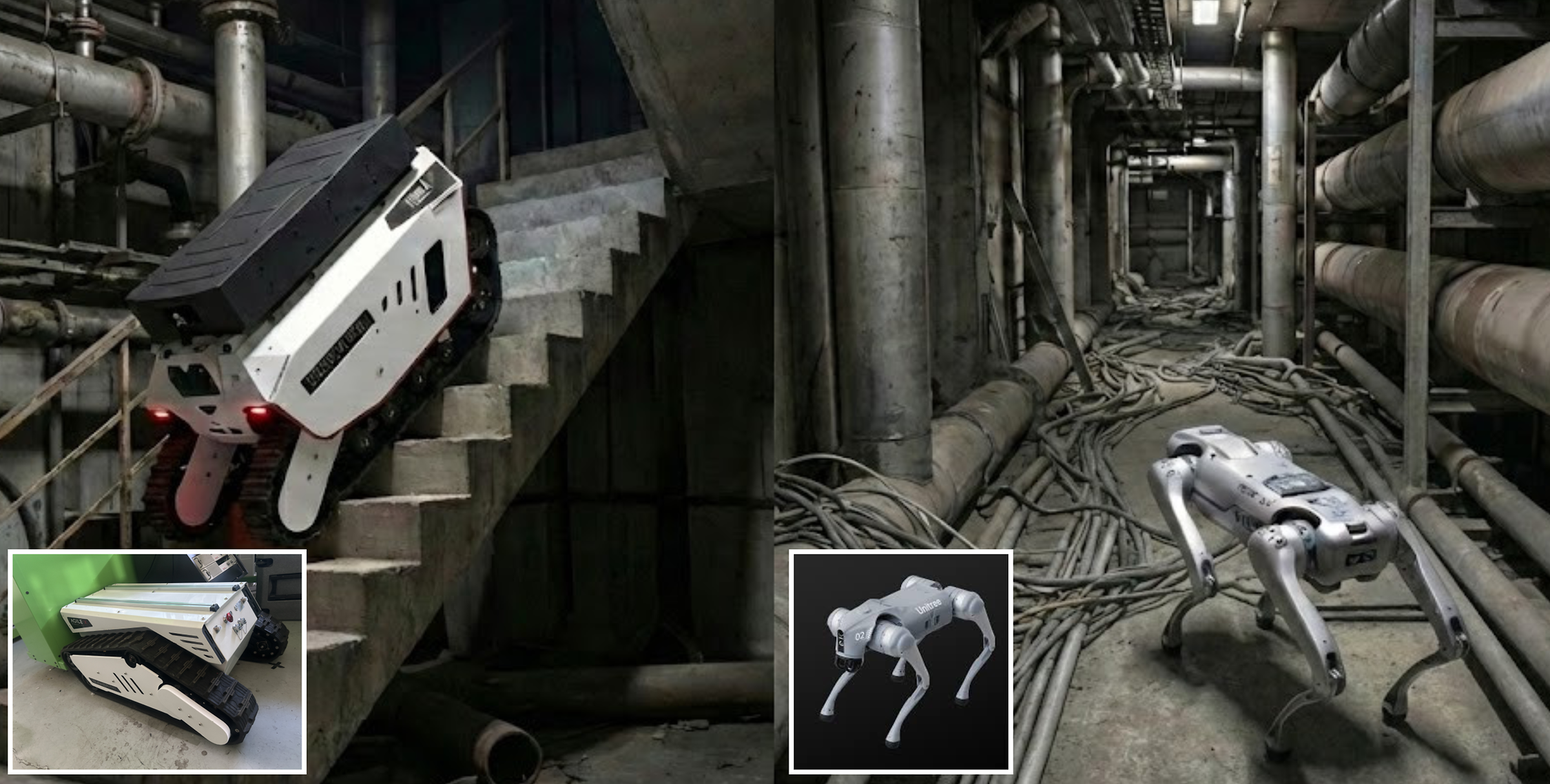
High-Mobility Robot Control for Unstructured Nuclear Environments
This study aims to develop control algorithms that maximize robot mobility in complex and unstructured environments within nuclear power plants, such as stairs, pipes, and narrow passageways. By utilizing tracked robots and quadruped walking robots, we research stable posture control and dynamic obstacle avoidance technologies, and validate the feasibility of mission performance in rough terrains resembling actual nuclear facilities. In particular, we are focusing on achieving optimal path planning and environment-adaptive locomotion technologies through hybrid mobility mechanisms.
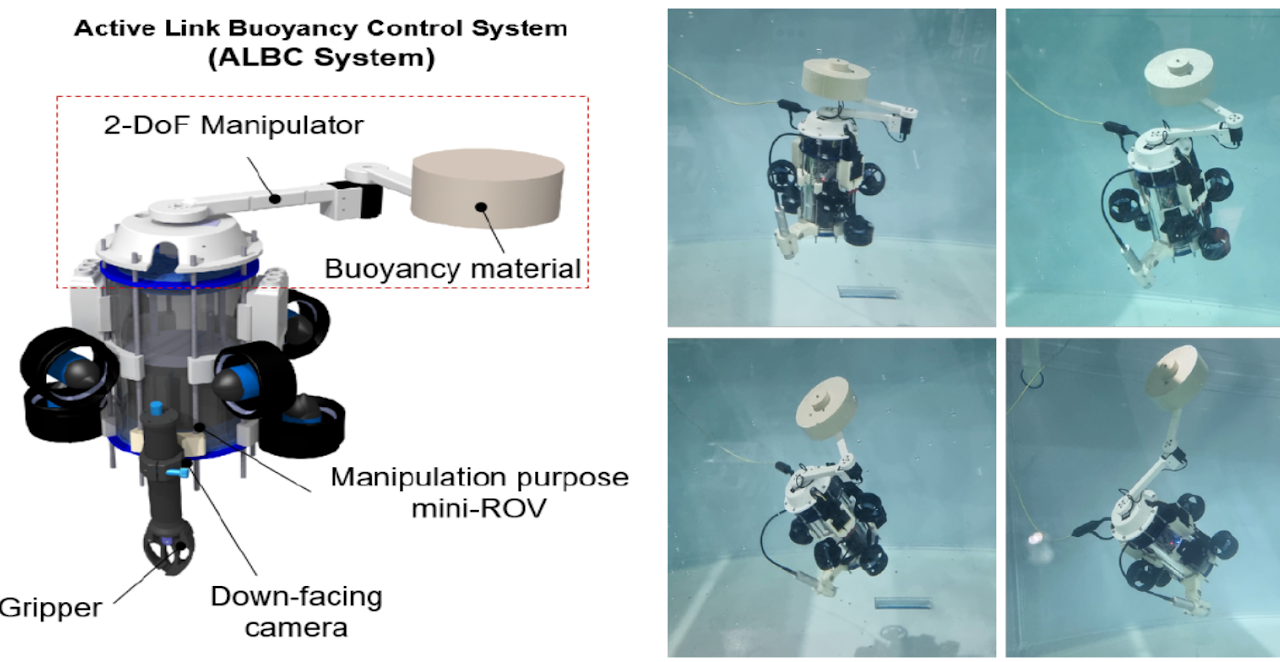
Active Link Buoyancy Control
Underwater manipulation robots utilizing ALBC (Active Link Buoyancy Control) systems offer an innovative underwater 3D posture control mechanism. With its novel concept and design hold significant potential for facilitating advanced underwater missions, including object recovery and 3D object reconstruction.
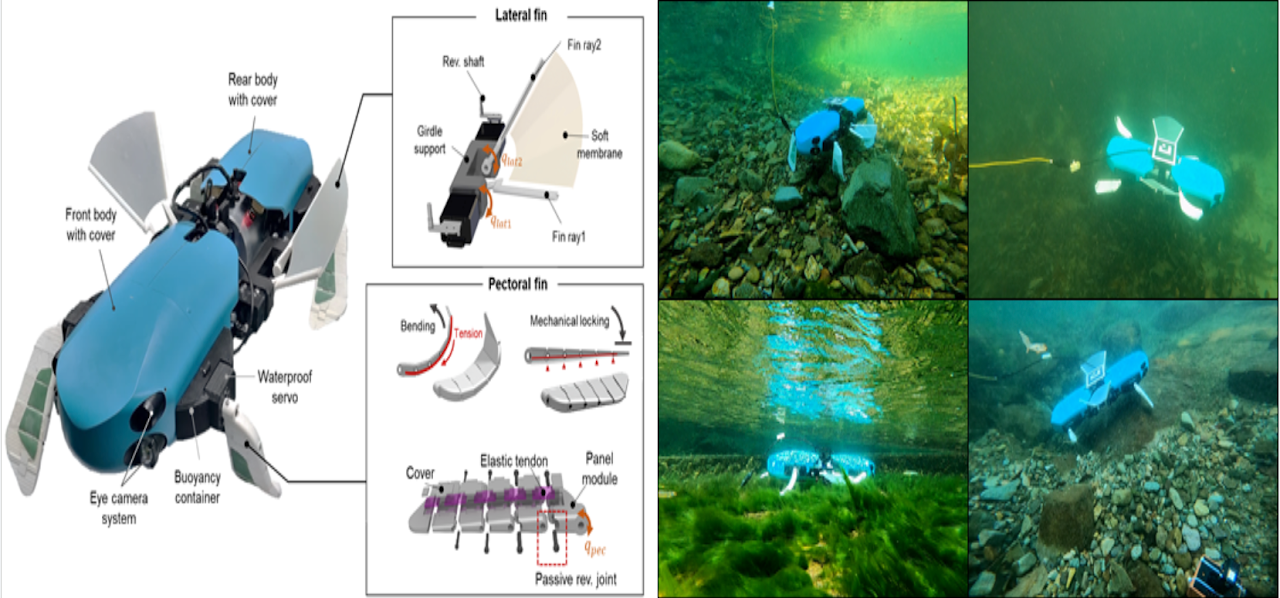
HERO-BLUE
"HERO-BLUE," a novel hybrid bio-inspired robot platform, integrates swimming and legged motions. HERO-BLUE operates successfully in various real-world environments through the utilization of state-of-the-art control strategies.
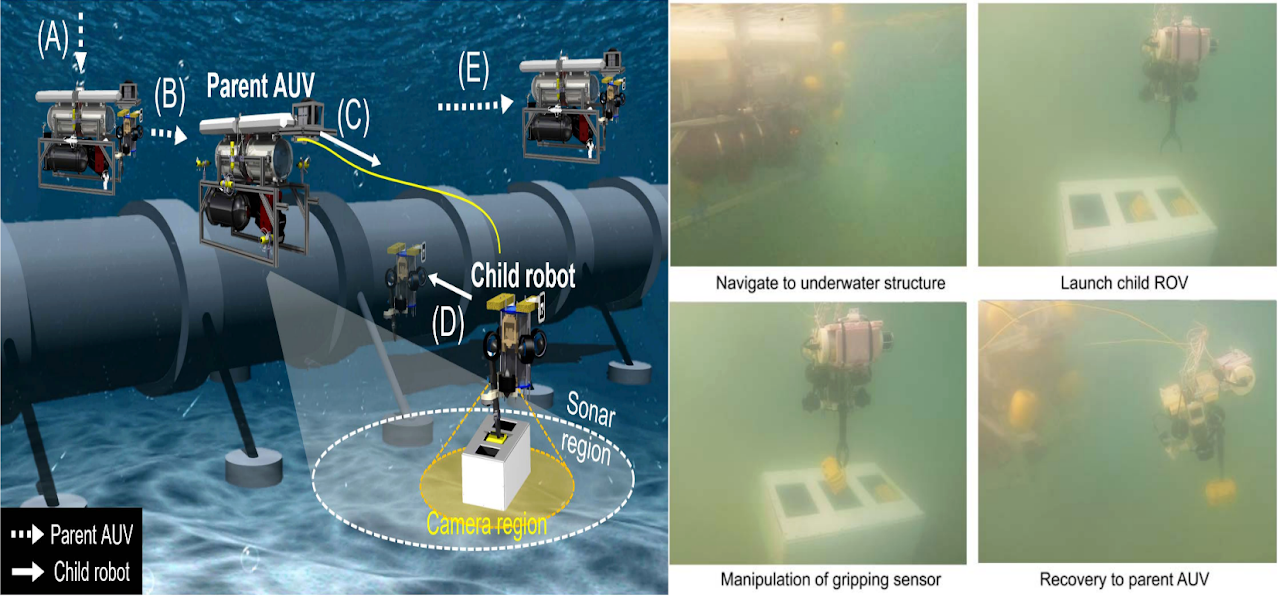
Underwater Multi-Robots System (Cyclops - Agent)
Multi-robot system for performing precision work for an extended period of time in harsh underwater environments. A main robot (Cyclops) carries an agent robot to a working area and controls it to serve precision work.
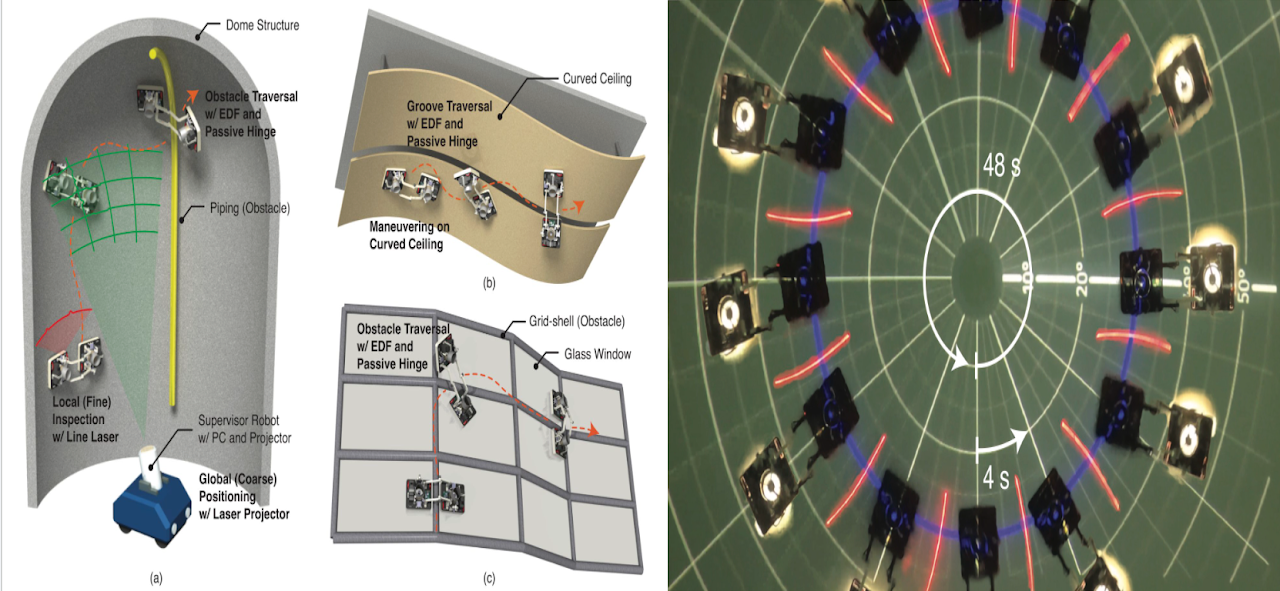
Wall-Climbing Robot System
Dual-unit wall-climbing robot can be attached to and maneuver on surfaces while traversing obstructions. Therefore, the inspection of high ceiling or surfaces are possible, especially on extreme environments such as nuclear power plants.
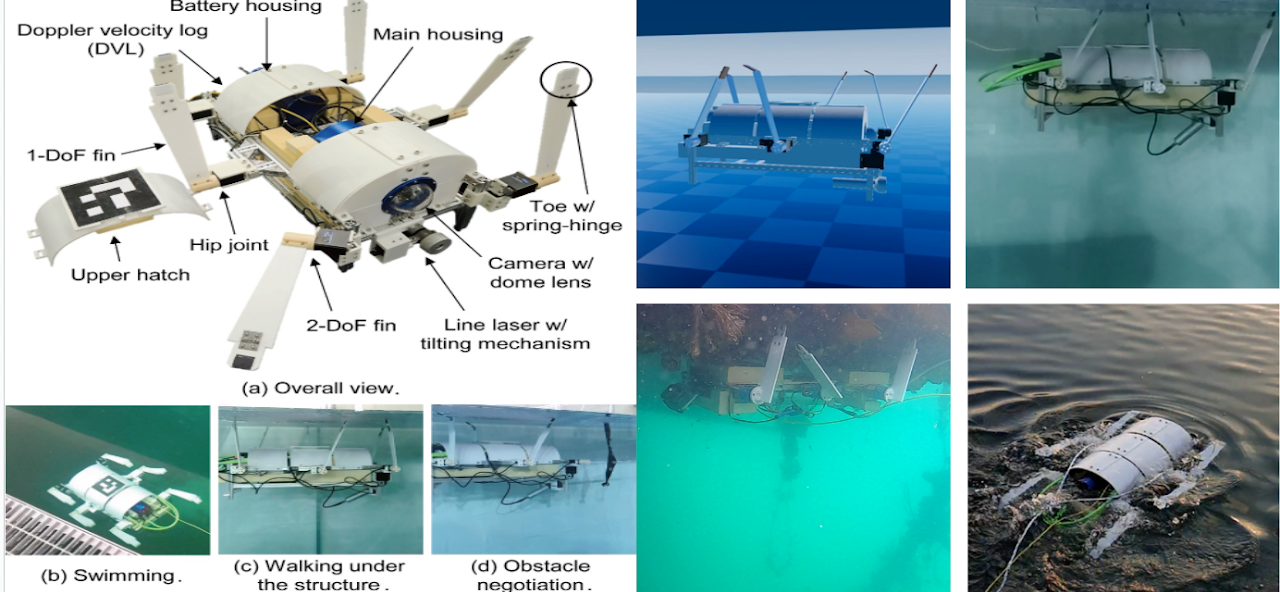
Biomimetic Underwater Robot for Inspection of Marine Structures (BRIM)
A biomimetic underwater robot, called BRIM, is capable of walking, obstacle negotiation, and swimming for precise inspections of marine structures. Current research focuses on reinforcement learning-based control methods to enhance its operational efficiency.
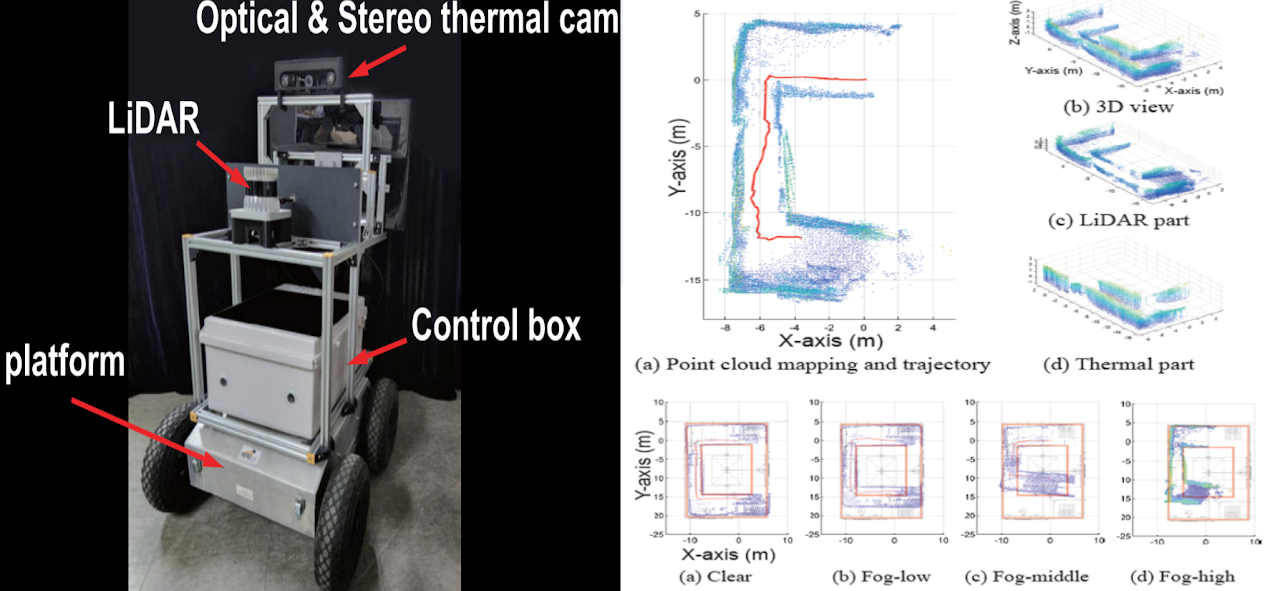
LiDAR-Stereo Thermal Sensor Fusion for Indoor Disaster Environment
This study focuses on generating reliable point clouds by fusing stereo thermal cameras with LiDAR sensors in indoor foggy environments due to disasters. The proposed method enables the creation of point clouds even in dense indoor foggy settings and can be applied to existing LiDAR mapping algorithms.
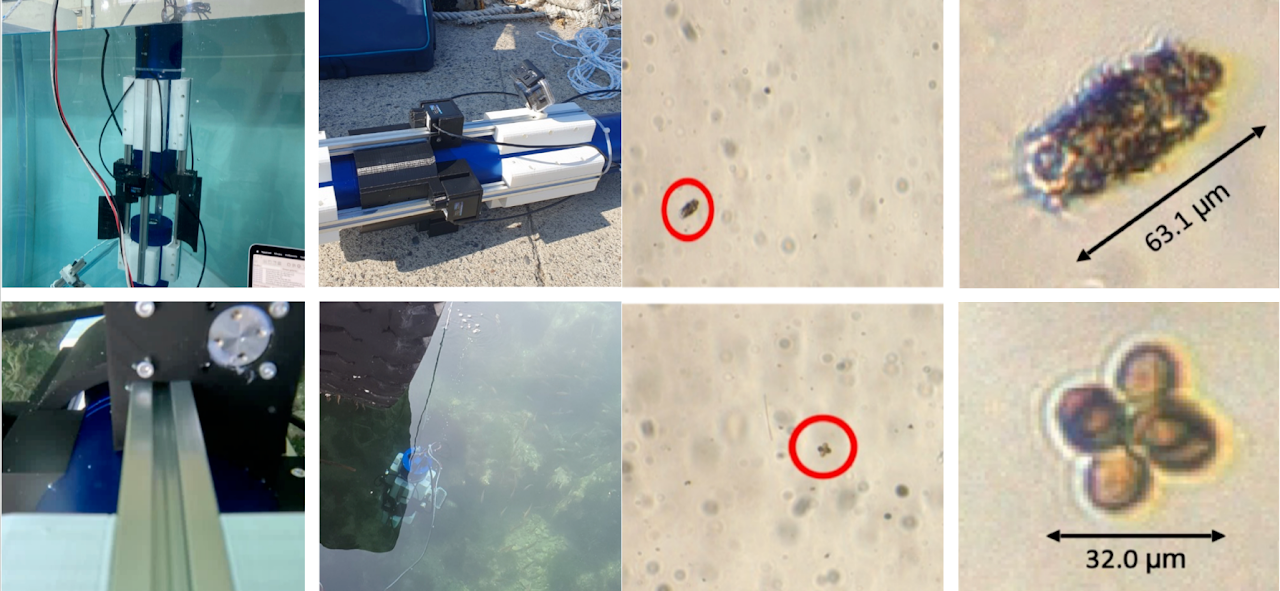
Underwater Real Time Microscope
Our underwater microscope aims to observe plankton in real-time in a stable manner, by using hatch mechanism to stabilize the water flow during observation. This system was verified for continuous long-term underwater operation for monitoring phytoplanktons.
Field AI & Perception
We conduct research aimed at developing cutting-edge AI technologies and applying robot AI in the field robotics to enhance robot perception, intelligence, and automation capabilities. Our research spans across all areas of robotics, including robot AI for camera vision, sonar, active sensors, and control strategies.
AI research themes include enhancing underwater ultrasonic camera perception, reinforcement learning for underwater robot motion enhancement, and underwater object recognition and retrieval.
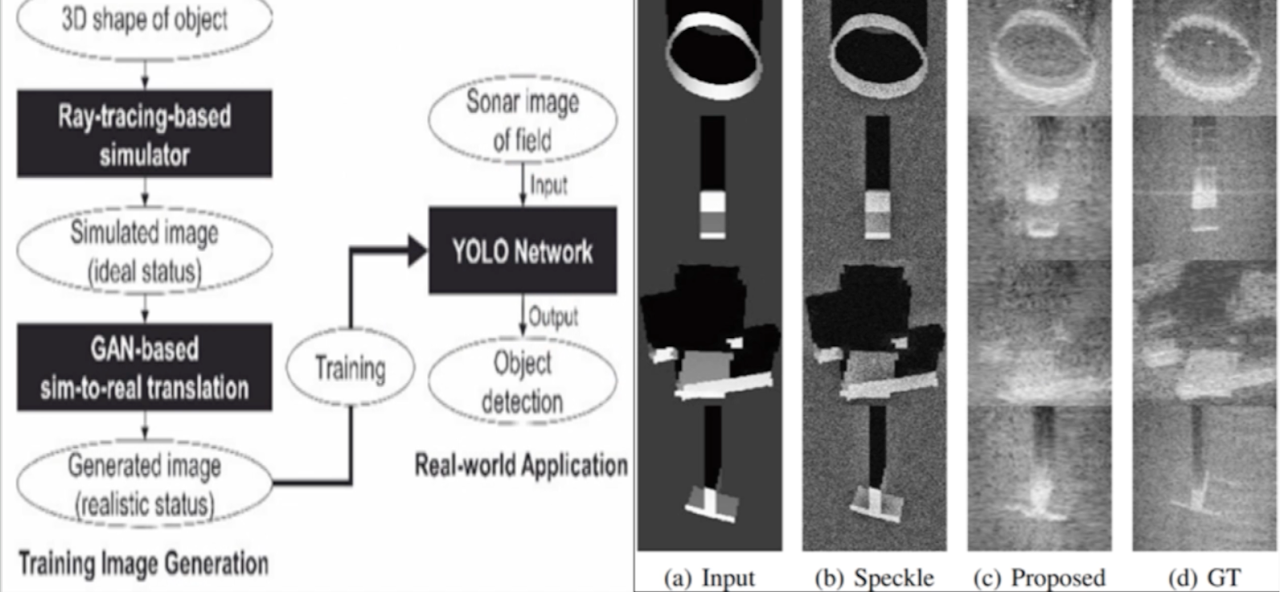
Realistic Sonar Image Simulation Using GAN
We have developed a method to synthesize realistic sonar images using a Generative Adversarial Network (GAN). A ray-tracing-based sonar simulator calculates semantic information of a viewed scene, and the GAN-based style transfer algorithm then generates realistic sonar images from the simulated images.
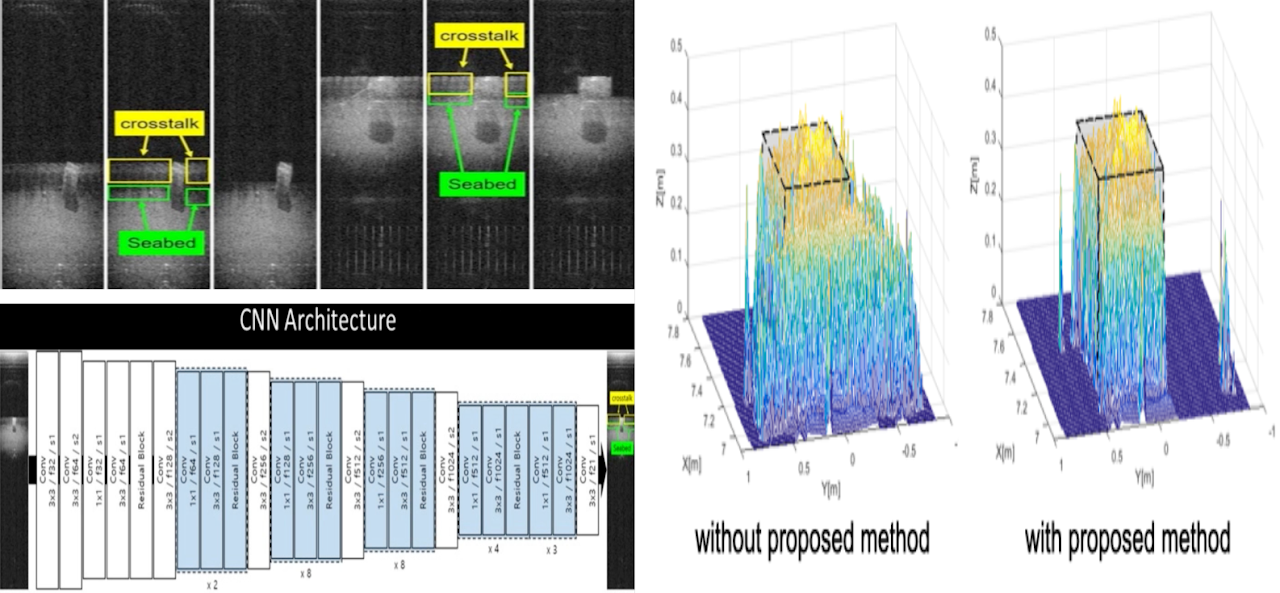
Deep-Learning-Based Crosstalk Removal in Forward Scan Sonar for Object Detection
We developed the detection and removal of crosstalk noise using a convolutional neural network in the images of forward scan sonar. Also, we applied the method to a three-dimensional point cloud generation and generated a more accurate point cloud.
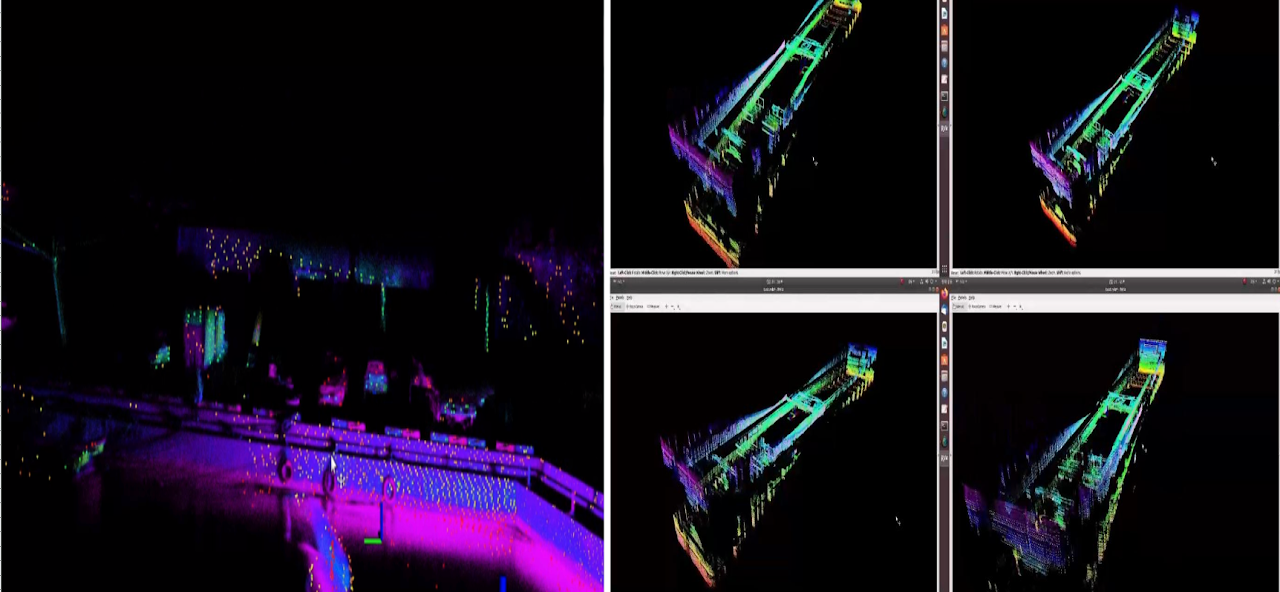
Water Surface Lidar SLAM
This study explores the fusion of LiDAR and sonar sensors for mapping purposes in both surface and underwater environments. By acquiring data with LiDAR sensors on the surface and sonar sensors underwater, the goal is to improve mapping accuracy and coverage across both domains through integrated sensor data.

Underwater 3D Reconstruction
Underwater sonar and vision-based 3D shape reconstruction methods. The methods are used to localize and recognize underwater objects and generate large-scale underwater maps.
Social Contribution
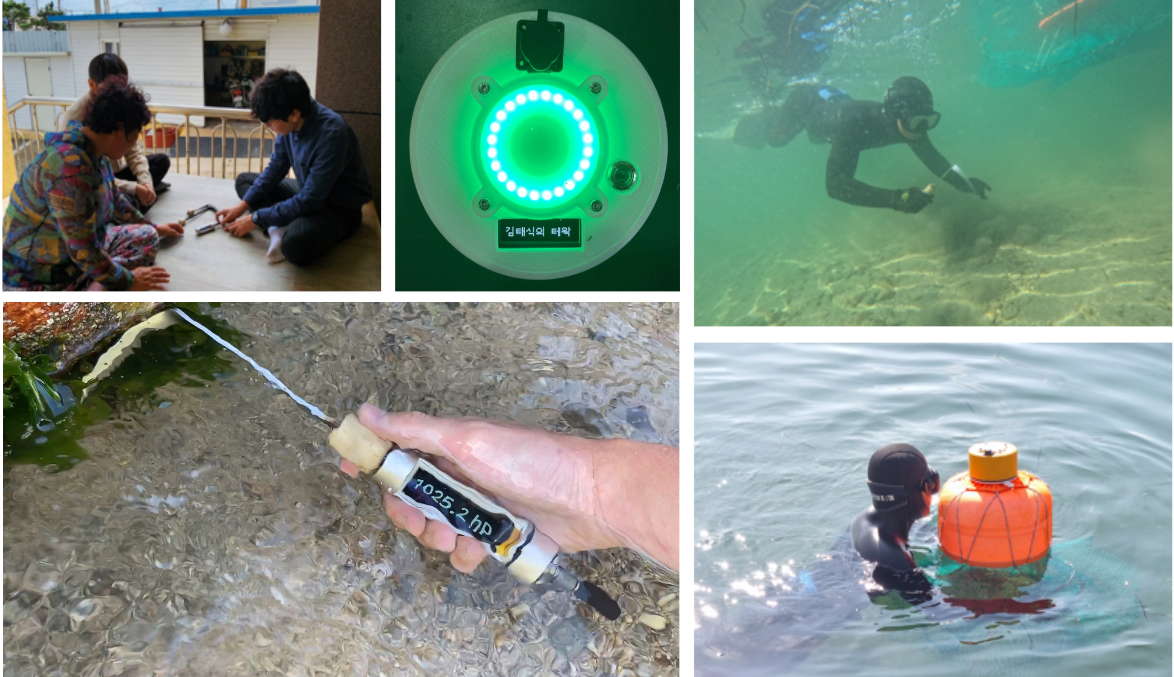
Safety & Health Management System for Haenyeo
As part of its social contribution, we developed safety equipment from 2019 to 2023 to prevent the cultural extinction caused by the aging of Haenyeo (Korean female divers). The Smart Taewak/Homi Safety System utilizes low-cost sensors to manage the working conditions of haenyeo and to provide alerts to the surroundings in case of emergencies.
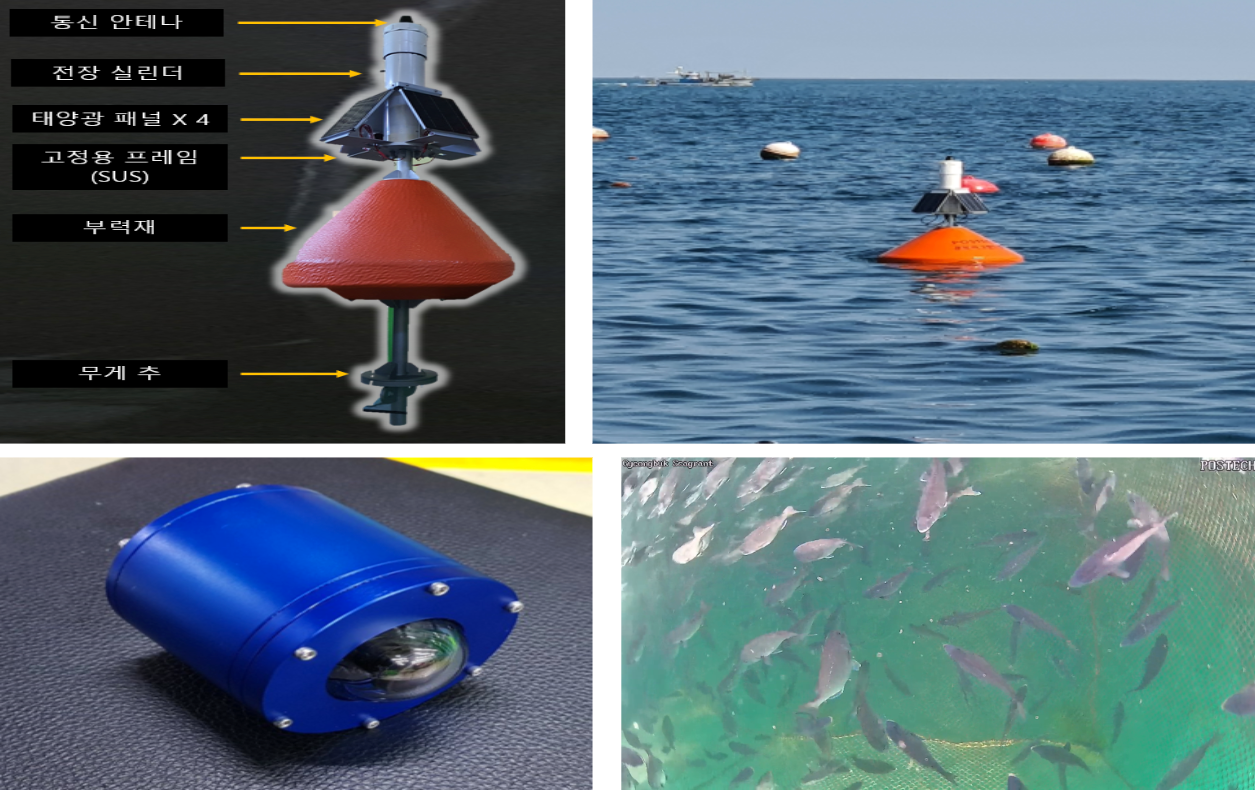
Self-Powered Monitoring/Sensing System for Offshore Aquaculture and AI-Based Real-Time Recognition Technology
We developed automation technology/equipment for reducing social costs of the primary industries through automated fish farming from 2016 to 2021. Underwater cameras, capable of observing fish species in extreme offshore aquaculture environments, are integrated with solar-powered buoy systems, enabling the acquisition of fish and environmental data through aquaculture monitoring.